


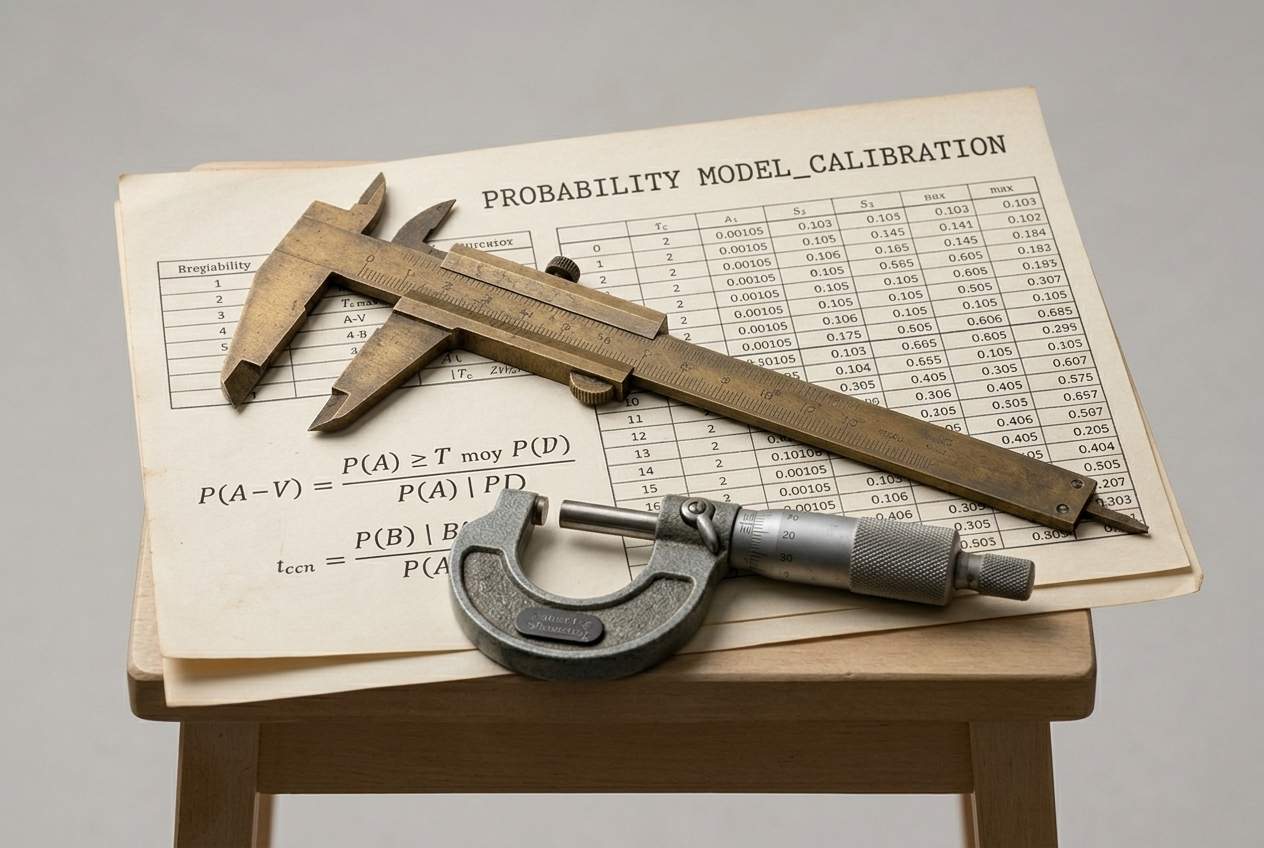
Every analyst eventually faces the same situation: a well-researched forecast doesn't play out. The natural reaction is to question the model, the data, or the method. But in many cases, what happened is simply variance. It is not a flaw. It is part of how probability works.
1. What Variance Actually Is
Variance is the natural spread of outcomes you would expect even when the underlying probabilities are accurate. A coin with a 50% chance of landing heads can still land tails five times in a row. That's not the coin lying to you. It's variance at work. Sports outcomes behave in much the same way, just with more moving parts.
2. Short-Term Noise vs. Long-Term Signal
Over a handful of matches, results can look erratic even when the underlying model is sound. It is only over a large sample, dozens or hundreds of instances, that the true accuracy of a statistical approach becomes visible. Judging a model after five events is like judging a die as "broken" after five rolls that didn't include a six.
3. The Psychological Trap
Variance is a mathematical reality, but it can also be a psychological test. A losing streak, even one that is statistically unremarkable, can trigger doubt, frustration, or the urge to abandon a sound method entirely. Recognising variance for what it is, expected, temporary, and not a reason to draw conclusions, helps keep analysis rational rather than reactive.
4. What to Actually Track
Instead of reacting to any single outcome, look at performance across a meaningful sample size. Tools like Advise, which log every forecast against its eventual result, exist for this reason. They let you evaluate a track record over time rather than drawing conclusions from a single match.
A single miss doesn't break a model, and a single hit doesn't validate one. Only the long run tells the real story.