


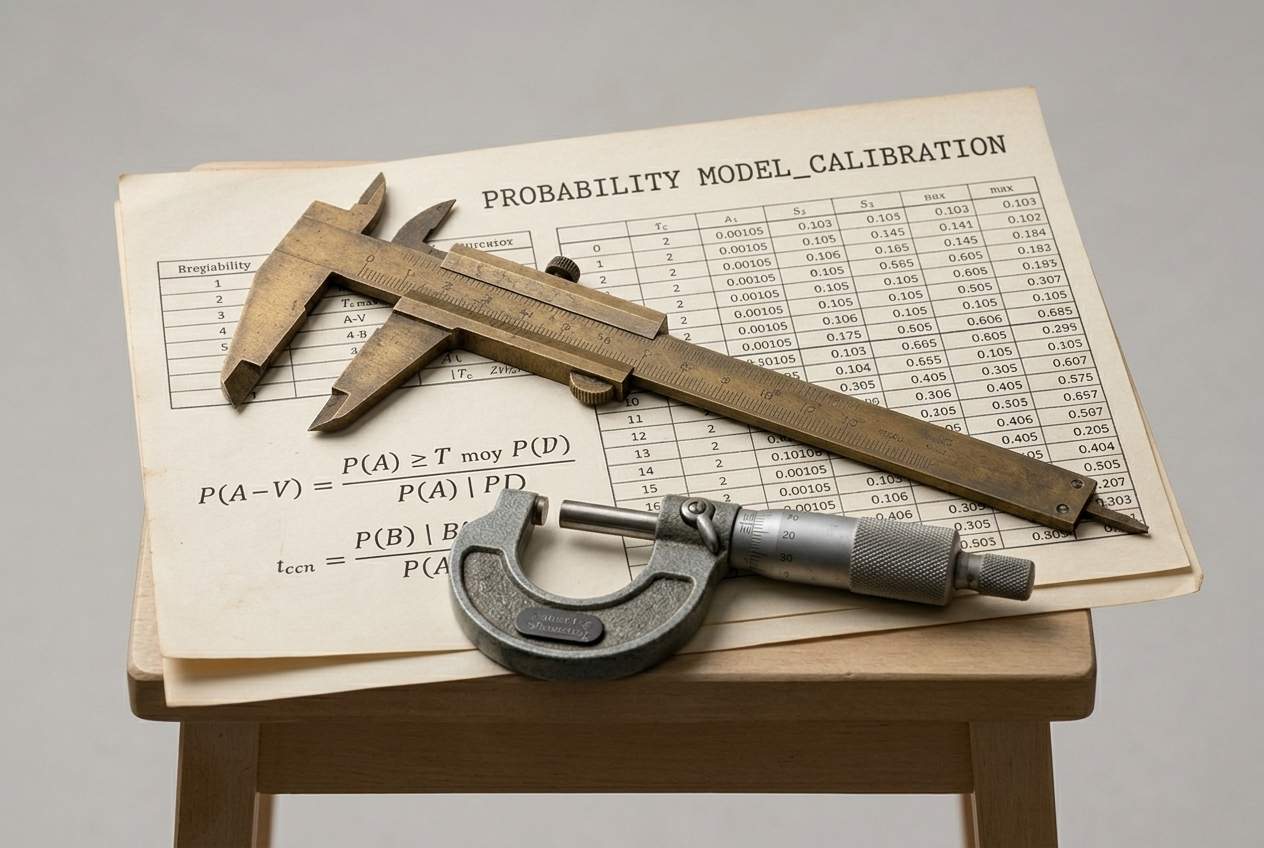
When a model tells you a team has a 70% chance of winning, what does that actually mean? For many people, the instinct is to treat it as a near-certainty. But probability doesn't work that way. Understanding the difference is the first step towards using predictive tools correctly.
1. Probability Describes Tendencies, Not Guarantees
A 70% probability means that, given similar conditions repeated many times, the outcome would occur roughly seven times out of ten. It says nothing about what will happen in this one specific instance. The other 30% isn't a rounding error. It's a real and meaningful part of the picture.
2. Where Probabilities Come From
Tools like Poisson Distribution PRO and Quantum Soccer generate probabilities by analysing historical patterns: goals scored, goals conceded, recent form, and statistical tendencies specific to each team. The output isn't a prediction of certainty. It's a structured estimate based on real data, designed to replace guesswork with a defensible starting point.
3. The Danger of Small Samples
One of the most common ways to misread probability is to judge a model by a single outcome. If a tool says an event is 80% likely and it doesn't happen, that doesn't mean the model failed. It means you witnessed the 20%. Probability only proves itself over a large number of instances, not one.
4. Using Probability as a Tool, Not an Oracle
The healthiest way to use predictive software is to treat its output as one input among several. It is a way to quantify likelihood, not a promise of what's coming. Numbers give you structure. Judgment, context, and patience are what turn that structure into genuinely informed analysis.
Probability doesn't remove uncertainty. It measures it. Understanding that distinction is what separates someone who reads data well from someone who simply reads numbers.