


Many people get into statistical analysis looking for a simple way to improve their results. They see advanced algorithms, historical data, and predictive software as tools that can give them an advantage.
The reality is that software can only provide the information. How you approach that information determines how useful it becomes.
In statistical modelling and match analysis, the difference between clear and confused decision-making rarely comes down to the data itself. It often comes down to how you use that data, especially when results do not go as expected.
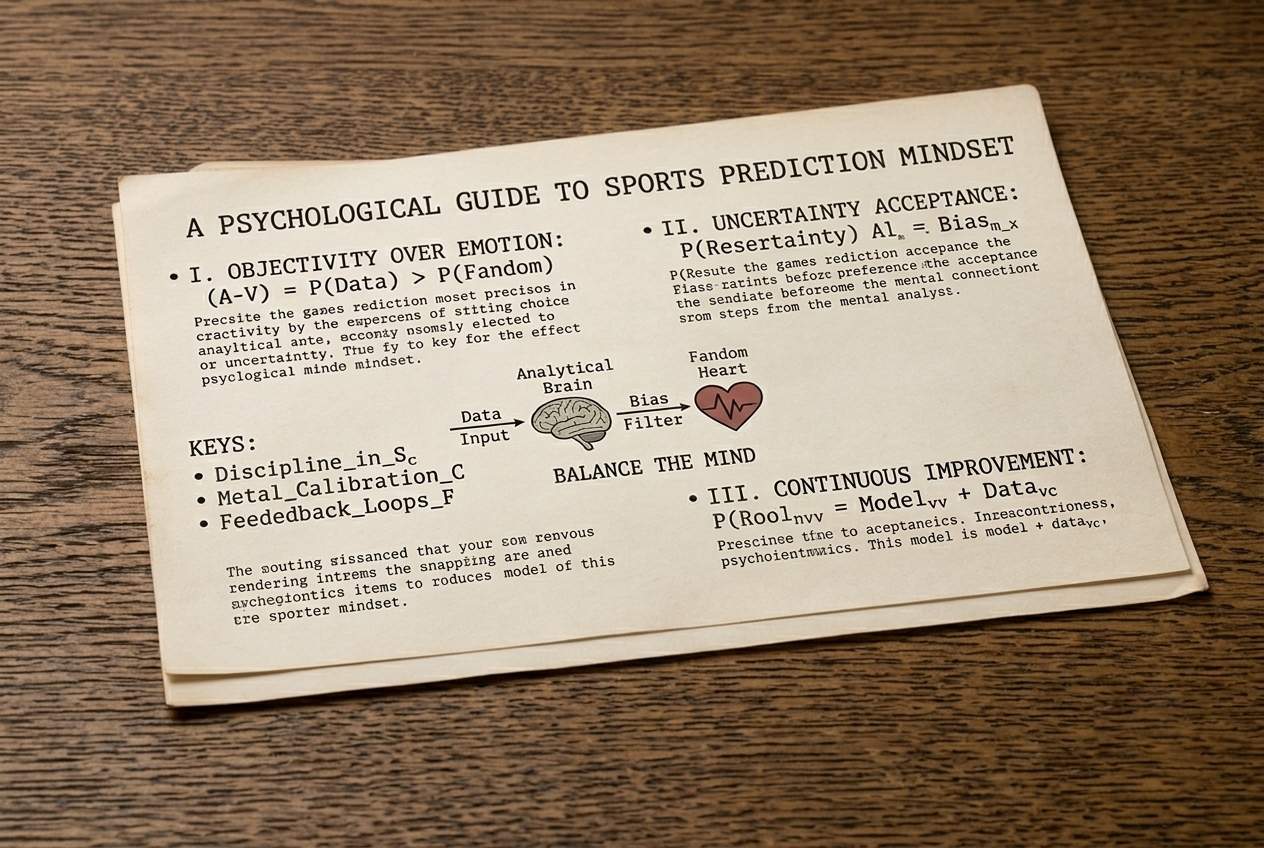
1. Discipline is the Key to the Plan
Even the best algorithm is of little use if you don't follow the method behind it. Sticking to a process, even when your instinct tells you to change direction, is what separates a consistent approach from a reactive one.
Our models are designed to provide a disciplined framework, using mathematical calculations based on objective data. The software can show you the results, but you still have to decide how to use them. When emotion takes over, it becomes much harder to follow the method consistently.
2. Embracing Variance: The Reality of Predictions
No matter how advanced a predictive tool is, it operates in a world of probabilities, not certainties.
The Professional Outlook: Amateurs expect perfect accuracy and panic when results go against them. Professionals understand variance and recognise that short-term results will not always reflect the underlying probabilities.
When using our predictive tools, the goal is to build a better understanding over time.
- Accept the misses: They are simply part of working with probability.
- Look at the macro, not the micro: A single inaccurate forecast doesn't mean the model is broken; it means variance is doing its job.
- Stay the course: The mathematical edge only plays out over large sample size of inputs.
3. Structure and Discipline: Treating Analysis Like a Business
If you treat statistical forecasting like a guessing game, you will get guesswork-like results. To make the most of advanced software, you need a structured approach and a consistent process.
- Keep things organized: Approach your analysis with the same structure you'd bring to any serious project.
- Define your scope: Establish clear limits on how much time and focus you dedicate to any single model or forecast.
- Know when to step back: Having predetermined checkpoints t review your process is a core feature of our software, but it requires human restraint to close the laptop and step away.
Conclusion: The Ultimate Synergy
Great software doesn't replace human intelligence. It amplifies it. By pairing our suite of statistical and predictive tools with a clear, analytical, and disciplined mindset, you can move away from relying on instinct and make decisions based on data.
The software is ready. The real question is: Is your mindset ready to match it?